Compare by work position
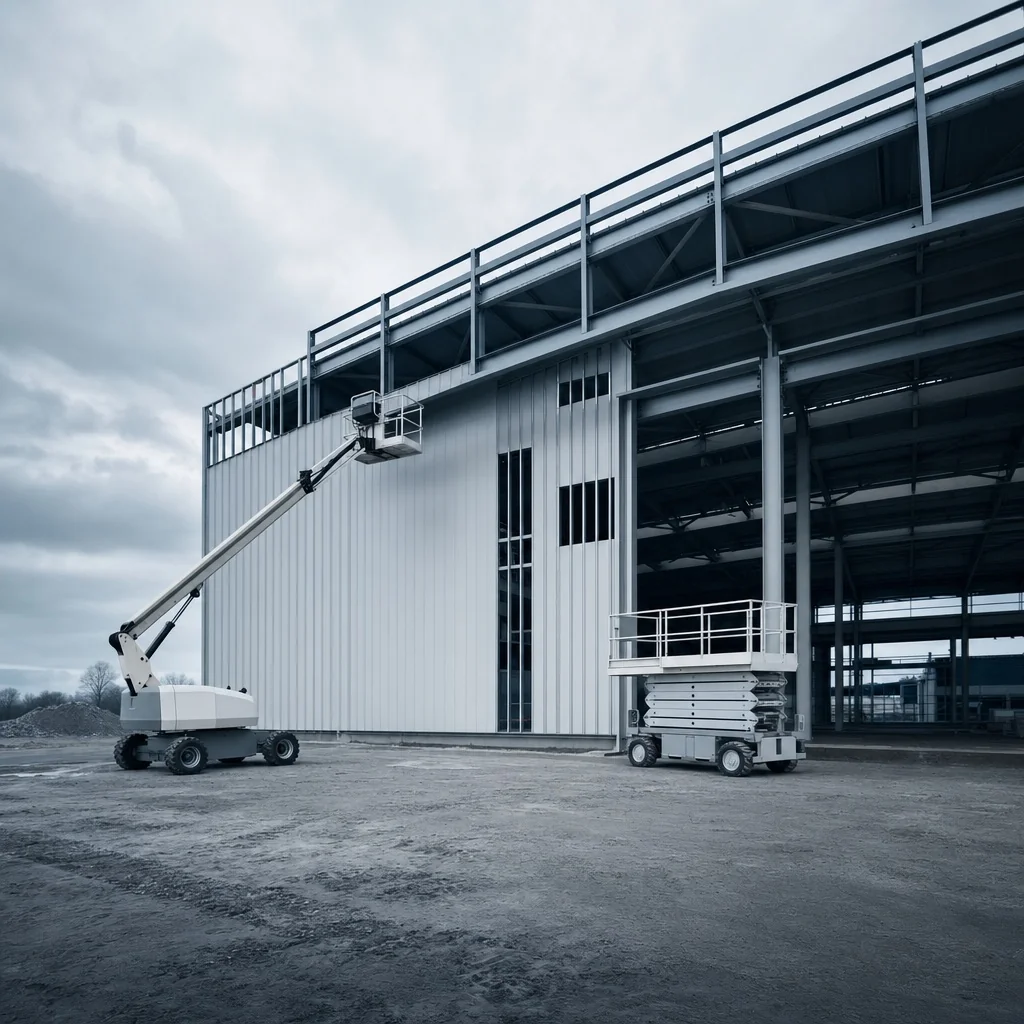
- Can the machine sit below the task? If so, /boom-lift-rental/ options offer up-and-over reach for piping, signage, and facade work. Where the task sits directly overhead with limited side reach, /electric-scissor-lift-rental/ or /rough-terrain-scissor-lift-rental/ concentrate on vertical access and deck space.
- Tight, sensitive interiors: /vertical-mast-lift-rental/ fits narrow corridors and finished floors common to clinical and lab spaces.
Surface and season
- Interior slabs and dock floors favor electric scissors with non-marking tires. In unheated shells during winter, plan for colder ambient conditions and longer travel distances between charges.
- Exterior work on uneven or snow-affected ground pushes toward rough-terrain scissors or booms with stabilizing features. Slopes near the foothills may require outriggers or specific grade capabilities.
Load, materials, and handling
- Heavy components or palletized racking benefit from /telehandler-rental/ support, feeding platforms on scissors or booms.
- Tool staging and consumables stay secure in /storage-containers-rental/ placed to shorten carries without constricting lift lanes.
Route constraints
- Door and corridor widths constrain platform choices before height even matters. Measure thresholds, inclines at dock plates, and any pinch points between columns.
- Night shifts across large pads need power and visibility. Coordinate /generators-light-towers-rental/ with equipment gates set by /temporary-fencing-barricades-rental/ so operators can move without glare or blind spots.
Typical Salt Lake City patterns
High-bay logistics aisles reward narrow electric platforms with good duty cycles and deck extensions. Exterior steel and envelope work during shoulder seasons often needs rough-terrain platforms that tolerate variable footing and valley winds.
Actual site conditions, each unit’s instructions, and project procedures govern elevated or exterior tasks.